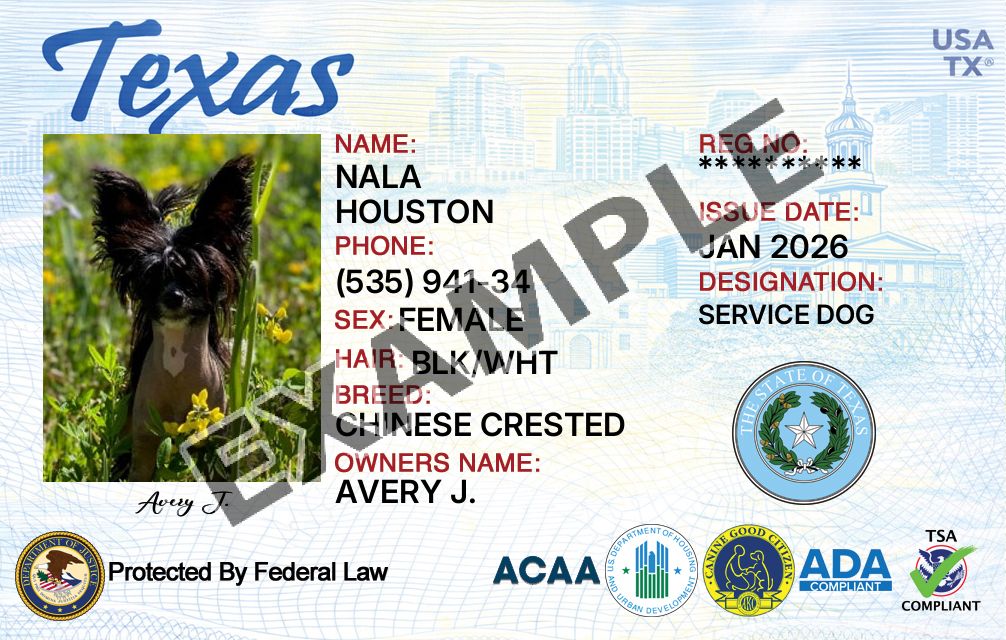
If you’re asking where do I register my dog in Austin, Texas for my service dog or emotional support dog, the most important thing to know is this: “registration” can mean different things. In Austin, “registering” a dog usually refers to local dog licensing and rabies compliance (handled through local animal services and public health rules), while service dog status and emotional support animal (ESA) status come from different legal frameworks and do not typically involve a city-issued “service dog license.”
This page explains how dog licensing works in Austin, Texas, what rabies vaccination requirements generally mean in practice, and the key differences between a dog license in Austin, Texas, a service dog under disability law, and an emotional support animal for housing-related accommodations.
- Dog licensing is a local compliance process tied to public health (especially rabies control) and animal control enforcement.
- Service dogs are defined by law (and training/tasks), not by a purchased “registration.”
- Emotional support animals are not service animals under the ADA, and typically do not get public-access rights—though they may be relevant for certain housing accommodation requests.
Where to Register or License Your Dog in Austin, Texas
Because licensing and rabies enforcement are handled locally, the best place to start when you want to know where to register a dog in Austin, Texas is with official City of Austin animal services and the City’s service request system. The offices below are examples of official points of contact connected to animal control dog license Austin questions, rabies control authority, and general guidance.
Official offices and contact points (examples)
| Office | Address | Phone | Hours | |
|---|---|---|---|---|
| Austin Animal Services (Austin Animal Center) |
7201 Levander Loop, Bldg. A Austin, TX 78702 |
512-978-0500 | animal.customerservice@austintexas.gov | Walk-In Adoption & Reclaim: Daily, 11:00 a.m. – 7:00 p.m. |
| Austin Animal Services (Animal Protection / Rabies Control Authority) | Not listed on the cited source as a separate public-facing street address; contact via the City animal services line. | 512-978-0519 | Not listed on the cited source | Not listed on the cited source |
| Austin 3-1-1 (City of Austin Service Requests & Department Routing) | Phone-based routing for City services | 3-1-1 (or 512-974-2000 outside Austin city limits) | Not listed on the cited source | Hours vary; call for current availability |
Note: If you live outside Austin city limits but within the Austin/Travis County area, you may still be served by the same shelter and rabies control authority for many issues. Start with Austin 3-1-1 / the City’s listed animal services contacts and ask where your specific address falls for licensing/rabies enforcement and animal control jurisdiction.
Overview of Dog Licensing in Austin, Texas
What “dog licensing” usually means in Austin
In many U.S. cities, a “dog license” is a locally issued tag or record that helps animal services connect a dog to an owner and confirms the dog meets key public health rules. In practice, licensing is closely tied to rabies vaccination and animal control enforcement. Texas law also supports this approach by allowing local jurisdictions to require proof of rabies vaccination before registering or licensing an animal.
Who enforces rabies control and animal regulations
In the Austin area, Austin Animal Services Animal Protection is identified as the rabies control authority for the City of Austin and unincorporated Travis County. That matters because “registration” questions frequently come up after a move, adoption, bite report, stray pickup, quarantine, or when an owner is trying to confirm what documentation is required.
The most common requirement you’ll hear first: rabies vaccination
Whether you’re focused on a general pet, a working service dog, or an emotional support animal, the public health foundation is the same: keep rabies vaccination current and maintain documentation. Texas guidance emphasizes that rabies rules can be more restrictive locally than state-level requirements and encourages owners to follow local ordinances and veterinarian guidance for staying compliant.
How Dog Licensing Works Locally in Austin, Texas
Step 1: Confirm your jurisdiction (city limits vs. nearby areas)
Dog licensing and enforcement are typically local. In Austin, the same animal services system may cover both the City of Austin and unincorporated Travis County for many sheltering and rabies control functions. If you’re unsure, contact Austin 3-1-1 (or the alternate number for callers outside city limits) and ask which office handles licensing/rabies enforcement for your address. This is the simplest way to find the correct “front door” without relying on third-party sites.
Step 2: Prepare the documents that usually drive licensing decisions
While the exact process can vary by local policy updates, licensing and registration decisions commonly revolve around proof of rabies vaccination and owner identity details. Keep your dog’s rabies certificate readily available, and have your identification and proof of residency ready if an office requests them.
Step 3: Contact the official office that can answer licensing and rabies questions
For most residents asking where to register a dog in Austin, Texas, the safest starting point is Austin Animal Services (Austin Animal Center) customer service and/or Austin 3-1-1. Austin Animal Services is the municipal shelter for the City of Austin and unincorporated Travis County, and Animal Protection is identified as the rabies control authority for those areas.
Step 4: Understand the difference between “license,” “microchip,” and “ID tag”
A license is a local compliance record (often rabies-related). A microchip is an identification technology used to reunite lost pets with owners. An ID tag is a quick visual identifier. Microchips and ID tags can be extremely helpful, but they are not always the same as a formal dog license in Austin, Texas. When you call an office, ask specifically: “Do you issue a city/county license tag, and what proof is required?”
Service Dog Laws in Austin, Texas
Service dogs are defined by function and training—not by a paid registration
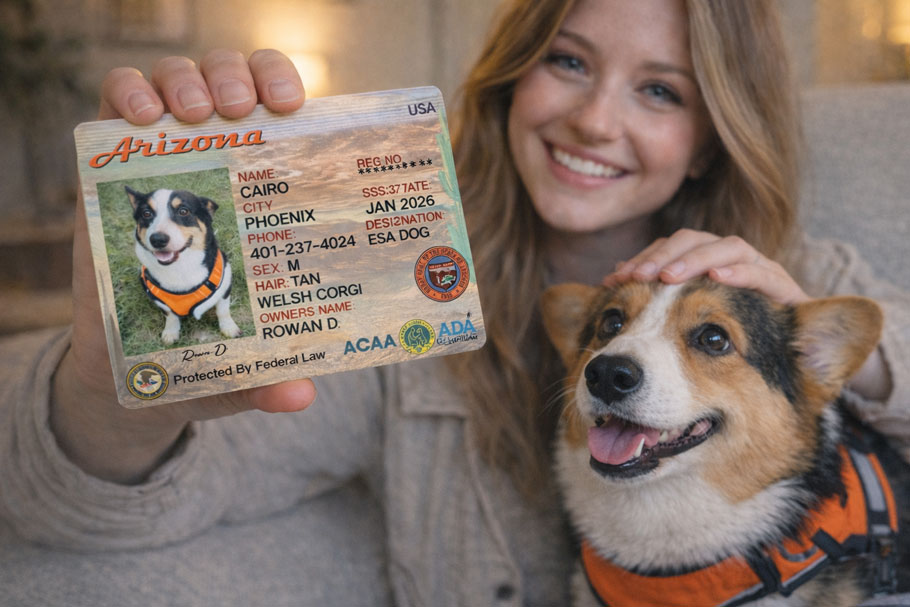
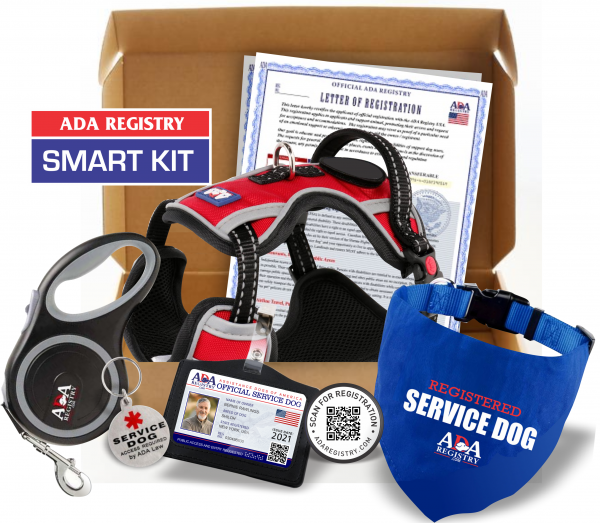
A true service dog is generally a dog trained to perform specific tasks for a person with a disability. While many websites sell “service dog registration,” those are typically not government-issued and do not create legal service-dog status by themselves. If you’re searching where do I register my dog in Austin, Texas for my service dog, the practical answer is: you usually don’t register a service dog with the city to make it a service dog. You may still need to comply with ordinary local public health rules (like rabies vaccination) that apply to all dogs.
Public access: what matters in real life (and what doesn’t)
In public settings, staff typically should not demand “registration papers” as proof of service-dog status. What matters is the dog’s behavior and whether the dog is actually trained to do disability-related tasks. Separately, Texas guidance also notes that an animal providing only comfort or emotional support is not considered a service animal for certain contexts.
Even service dogs must follow local health and safety rules
A service dog is not exempt from core animal public health expectations. Keep vaccinations current, retain your rabies certificate, and follow leash/control requirements and any local rules that apply generally. If your dog bites someone or is involved in an exposure incident, rabies control procedures may apply regardless of service-dog status.
Emotional Support Animal Rules in Austin, Texas
An ESA is not the same as a service dog
An emotional support animal (ESA) provides comfort or emotional support, but that alone does not make the animal a service animal under common ADA-based definitions used for public access. Texas guidance aimed at clarifying service-animal standards states that an animal that provides only comfort or emotional support is not a service animal.
Where ESAs most commonly matter: housing accommodations
People often pursue ESA documentation for housing-related accommodation requests. This process generally involves communication with a housing provider and may involve disability-related documentation consistent with housing rules. Importantly, this is not the same as getting an animal control dog license Austin or a city “registration” that grants public access.
Licensing and rabies compliance still apply to ESAs
Even if your dog is an ESA, you still handle the “animal” side of compliance locally—rabies vaccination, keeping proof, and following local ordinances. If your goal is simply to be compliant in Austin, focus on rabies documentation and confirm local licensing expectations through Austin Animal Services or Austin 3-1-1.
Frequently Asked Questions
A service dog’s legal status is based on disability-related work/tasks and training—not a city-issued “service dog license.” However, your dog (including a service dog) still needs to comply with local public health rules such as rabies vaccination, and you should confirm any local licensing/tag expectations by contacting Austin Animal Services or Austin 3-1-1.
Start with official local agencies:
- Austin Animal Services (Austin Animal Center) for animal-services guidance and public contact options.
- Austin 3-1-1 to route your question based on your exact address (city limits vs. outside city limits).
Rabies vaccination is a core public health requirement, and Texas guidance emphasizes staying compliant and following local ordinances that may be more restrictive than state-level rules. Many local licensing systems require proof of current rabies vaccination before issuing a license or registration.
ESAs typically are not “registered” with the city to gain public access. ESA needs most often arise in housing accommodation contexts, while the city/county side focuses on animal public health and safety (rabies control, animal protection, and related compliance). For local animal compliance questions, contact Austin Animal Services or Austin 3-1-1.
Austin Animal Services’ Animal Protection is identified as the rabies control authority for the City of Austin and unincorporated Travis County. If you have questions about rabies control procedures, quarantine, or enforcement, start there or call Austin 3-1-1 for routing.